Flood Action Week: Essential Advice for South London Landlords and Tenants
Published by Gateway Property Hub | Serving Croydon, Purley, Sutton, Bromley and Surrounding Areas
Flooding is one of the most disruptive and distressing events that can affect a home. Whether you own a rental property or rent one, the prospect of rising water levels, damaged belongings, and uncertain legal responsibilities can feel overwhelming especially in the heat of an emergency.
That is why Flood Action Week exists: to cut through the panic and replace it with preparation. At Gateway Property Hub, we believe that being informed is the single most powerful thing you can do to protect your property, your tenants, and your peace of mind. This guide is designed for both landlords and tenants across Croydon, Purley, Sutton, Bromley and the surrounding areas giving each audience the clarity they need, all in one place.
Let's turn a daunting subject into a practical action plan.
Understanding Flood Risk in South London and Surrey
Before diving into responsibilities and procedures, it is worth understanding why flooding matters specifically to our local area.
Parts of Croydon, Purley, Sutton, and Bromley sit within or near flood-risk zones identified by the Environment Agency. The River Wandle, the River Cray, and various smaller watercourses and surface water drainage networks all contribute to localised flood risk particularly during periods of prolonged or heavy rainfall. Surface water flooding (where rainwater cannot drain away quickly enough) is increasingly common in urban and suburban areas due to hard landscaping and ageing drainage infrastructure.
This does not mean flooding is inevitable but it does mean that preparation is not optional. Whether you are a landlord with a portfolio of properties or a tenant settling into a new home, understanding your local risk and knowing what to do is simply good sense.
You can check the flood risk for any property in England using the Environment Agency's Flood Map for Planning at gov.uk/check-flood-risk.
For Landlords: Your Legal Duties and Responsibilities
Understanding Your Duty of Care
As a landlord, you have a legal and moral duty of care towards your tenants. This extends beyond routine maintenance it includes taking reasonable steps to ensure that the property is as protected as possible against foreseeable risks, including flooding.
Under the Landlord and Tenant Act 1985, you are required to keep the structure and exterior of the property in good repair. This includes:
Gutters, downpipes, and drainage systems
Roofing and external walls
Basements and lower ground floor areas prone to water ingress
Neglecting these areas particularly if a tenant has previously reported issues could expose you to claims of negligence should flood damage occur.
Insurance: What You Must Have and What You Should Consider
Standard buildings insurance is essential for any landlord. However, not all buildings insurance policies automatically include flood cover, and many landlords are unaware of the gaps in their protection until it is too late.
Here is what to check with your insurer:
Flood cover included? Confirm explicitly do not assume.
Excess amounts for flood claims- these can be significantly higher than standard excesses, particularly for properties in higher-risk zones.
Loss of rent cover- if a property becomes uninhabitable due to flooding, this covers the rental income you would otherwise lose.
Alternative accommodation cover- some policies will cover the cost of housing your tenants temporarily.
Contents insurance- as a landlord, you are responsible for insuring any furnishings or appliances you provide. Tenants must arrange their own contents insurance for their personal belongings.
Important: If your property is in a designated flood-risk area, you may be eligible for cover through the Flood Re scheme — a government-backed reinsurance scheme designed to make flood insurance more affordable and accessible for higher-risk properties. Visit floodre.co.uk for more information.
Pre-Flood Preparation: Practical Steps for Landlords
Prevention and preparation are far less costly than recovery. Consider the following measures:
Carry out an annual property inspection with flood risk in mind check drainage, seals around doors and windows, and any low-lying entry points.
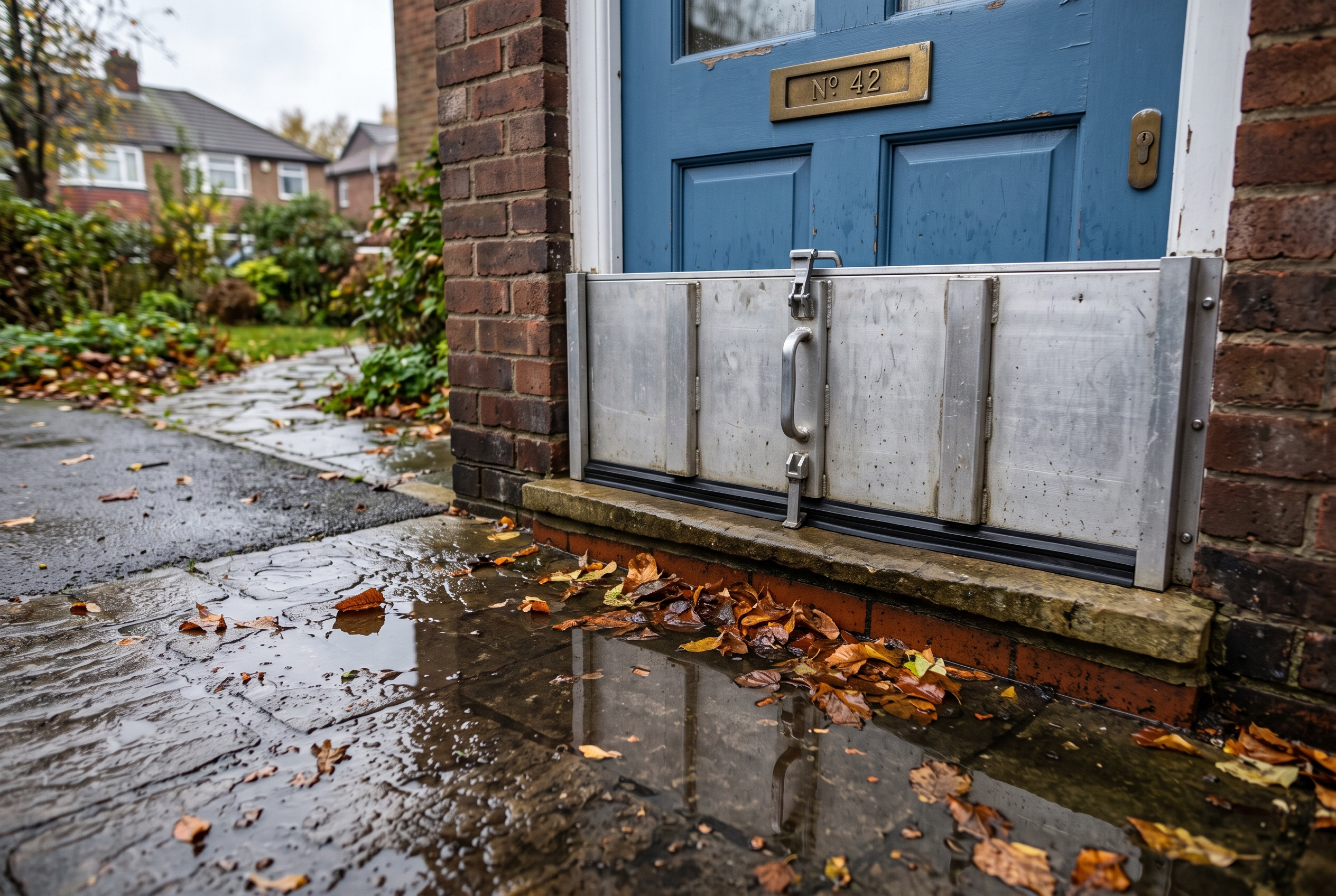
Install flood resilience measures such as air brick covers, non-return valves on drains, and water-resistant flooring in ground floor or basement properties.
Register the property for Environment Agency flood warnings at gov.uk/sign-up-for-flood-warnings.
Provide tenants with a written emergency procedure including who to contact, where the stopcock is located, and what to do if flooding occurs.
Keep records of all maintenance work, inspections, and communications with tenants. These records are invaluable when making insurance claims or defending against negligence claims.
Review your tenancy agreement to ensure it clearly sets out responsibilities during emergency situations.
During and After a Flood: Landlord Responsibilities
When flooding occurs, your responsibilities as a landlord do not pause. Here is what you should do:
Respond promptly to any report of flooding from your tenant delays can worsen damage and damage the landlord-tenant relationship.
Arrange emergency repairs as quickly as possible to make the property safe and habitable.
Do not pressure tenants to remain in a property that is unsafe or uninhabitable.
Notify your insurer immediately and document all damage thoroughly with photographs and written records before any remedial work begins.
Arrange alternative accommodation if the property is uninhabitable check whether your insurance policy covers this.
Communicate clearly and regularly with your tenant throughout the recovery process, including realistic timelines for repairs.
A note on rent during flooding: If a property becomes wholly uninhabitable, tenants are generally not obliged to pay rent for the period they cannot occupy the property. This is a nuanced area of law, so we strongly recommend seeking professional advice. The team at Gateway Property Hub is always available to guide landlords through these situations.
For Tenants: Your Rights and Responsibilities
Know Your Rights Before an Emergency Arises
Flooding can feel like a crisis that is entirely out of your hands but knowing your rights in advance puts you firmly back in control. Here is what every tenant should understand:
Your landlord is responsible for the structure of the property including drainage, gutters, and external walls. If you notice any maintenance issues that could contribute to flood risk, report them in writing as soon as possible.
You are responsible for your own belongings your landlord's insurance does not cover your personal possessions. Taking out contents insurance is strongly advisable, and many policies are surprisingly affordable.
You have the right to a safe and habitable home if flooding renders your home uninhabitable, you should not be required to remain there, and you may not be liable for rent during that period.
What to Do in a Flood Emergency
If flooding occurs at your property, stay calm and follow these steps:
Ensure your safety first if there is any risk to life, call 999 immediately.
Contact your landlord or letting agent as soon as it is safe to do so. If you are managed by Gateway Property Hub, contact us directly on 02080901778 or at info@gatewaypropertyhub.co.uk.
Turn off the electricity at the fuse box if it is safe to do so and water has entered the property never touch electrical switches if you are standing in water.
Turn off the water supply at the stopcock if water is entering from a burst pipe or internal source.
Move valuables and important documents to higher ground within the property if it is safe to do so.
Document everything take photographs and videos of the damage to support any insurance claims.
Do not return to the property after evacuation until it has been confirmed safe by your landlord, letting agent, or emergency services.
Pre-Flood Preparation: Practical Steps for Tenants
You do not need to wait for a flood warning to take action. Here is how to prepare:
Check your flood risk at gov.uk/check-flood-risk and sign up for free flood warnings from the Environment Agency.
Know where the stopcock is ask your landlord or letting agent if you are unsure.
Take out contents insurance that includes flood cover. Check the policy carefully for exclusions.
Keep a note of emergency contacts your landlord, letting agent, and local council somewhere accessible, not just on your phone.
Prepare a basic flood kit including a torch, spare batteries, copies of important documents, medications, and a change of clothes stored somewhere above ground level.
Report any maintenance concerns promptly and in writing blocked gutters, slow-draining sinks, or damp patches can all be early warning signs.
After a Flood: Tenant Recovery Steps
Once the immediate emergency has passed, the recovery process begins. Here is what to focus on:
Do not re-enter the property until your landlord or letting agent has confirmed it is structurally safe.
Contact your contents insurer to begin your claim and provide photographic evidence of damage.
Keep receipts for any emergency expenses such as temporary accommodation these may be reimbursable under your insurance policy.
Communicate with your landlord in writing throughout the recovery process to maintain a clear record.
Contact your local council if you need emergency housing support Croydon, Sutton, and Bromley councils all have housing emergency teams.
Insurance and Financial Protection: What Everyone Should Know
The Flood Re Scheme
As mentioned above, the Flood Re scheme is a crucial safety net for properties in higher-risk flood zones. It allows insurers to re-insure the flood element of home insurance policies, keeping premiums manageable for those who might otherwise struggle to obtain cover.
Key points about Flood Re:
It applies to residential properties built before 1 January 2009
It covers both buildings and contents insurance
It is available through a wide range of mainstream insurers you do not apply directly to Flood Re
It does not cover buy-to-let properties (though landlords can still obtain flood cover through specialist insurers)
Making a Flood Insurance Claim
Whether you are a landlord or a tenant, making a successful insurance claim relies on preparation and documentation. Follow these principles:
Report the claim as soon as possible most policies require prompt notification.
Photograph and video all damage before any cleaning or repairs begin.
Keep a written record of all damage, affected items, and estimated values.
Do not dispose of damaged items until your insurer has confirmed you may do so they may wish to inspect them.
Request a loss adjuster visit if the damage is significant this is your right under most policies.
Keep all receipts for emergency costs, temporary accommodation, and repairs.
Gateway Property Hub's Role as Your Trusted Local Advisor
At Gateway Property Hub, we have been supporting landlords and tenants across Croydon, Purley, Sutton, Bromley and the surrounding areas since 2005. Our work goes well beyond finding tenants or collecting rent we are here to help you navigate every aspect of property management, including the unexpected.
Our tenancy management and maintenance services mean that when something goes wrong whether it is a burst pipe, a blocked drain, or a flood. Our team is ready to coordinate a swift and professional response. We work with trusted local contractors, maintain detailed property records, and communicate clearly with all parties to ensure that difficult situations are handled with minimum stress and maximum efficiency.
We also help landlords stay ahead of their legal obligations, ensuring properties are properly maintained, inspections are carried out regularly, and documentation is always in order.
If you are a landlord concerned about your property's flood preparedness, or a tenant who has questions about your rights and responsibilities, we would love to hear from you. Call us on 02080901778, email info@gatewaypropertyhub.co.uk, or visit us at 138 Maddison House, 226 High Street, Croydon, CR9 1DF. We are open seven days a week.
Useful Resources and Local Contacts
Environment Agency Flood Warnings: gov.uk/sign-up-for-flood-warnings
Check Your Flood Risk: gov.uk/check-flood-risk
Flood Re Scheme: floodre.co.uk
National Flood Forum: nationalfloodforum.org.uk
London Borough of Croydon Emergency Housing: croydon.gov.uk
London Borough of Sutton Housing: sutton.gov.uk
London Borough of Bromley Housing: bromley.gov.uk
Emergency Services: 999 (life-threatening emergencies) | 105 (power cuts)
Final Thoughts: Preparation is Power
Flooding is undeniably serious but it is not something that has to catch you off guard. Whether you are a landlord safeguarding your investment and your tenants, or a renter protecting your home and belongings, the steps outlined in this guide give you everything you need to prepare, respond, and recover with confidence.
Flood Action Week is the perfect moment to take stock, check your insurance, review your emergency contacts, and make sure everyone involved in your property knows what to do. A little preparation today can make an enormous difference when it matters most.
Gateway Property Hub is here to help before, during, and after. We are proud to be a trusted part of the Croydon, Purley, Sutton, and Bromley community, and we take that responsibility seriously.
For expert property management advice, contact the Gateway Property Hub team on 02080901778 or at info@gatewaypropertyhub.co.uk. Visit us online at www.gatewaypropertyhub.co.uk