How to Get Rid of Mice in a Rented Property
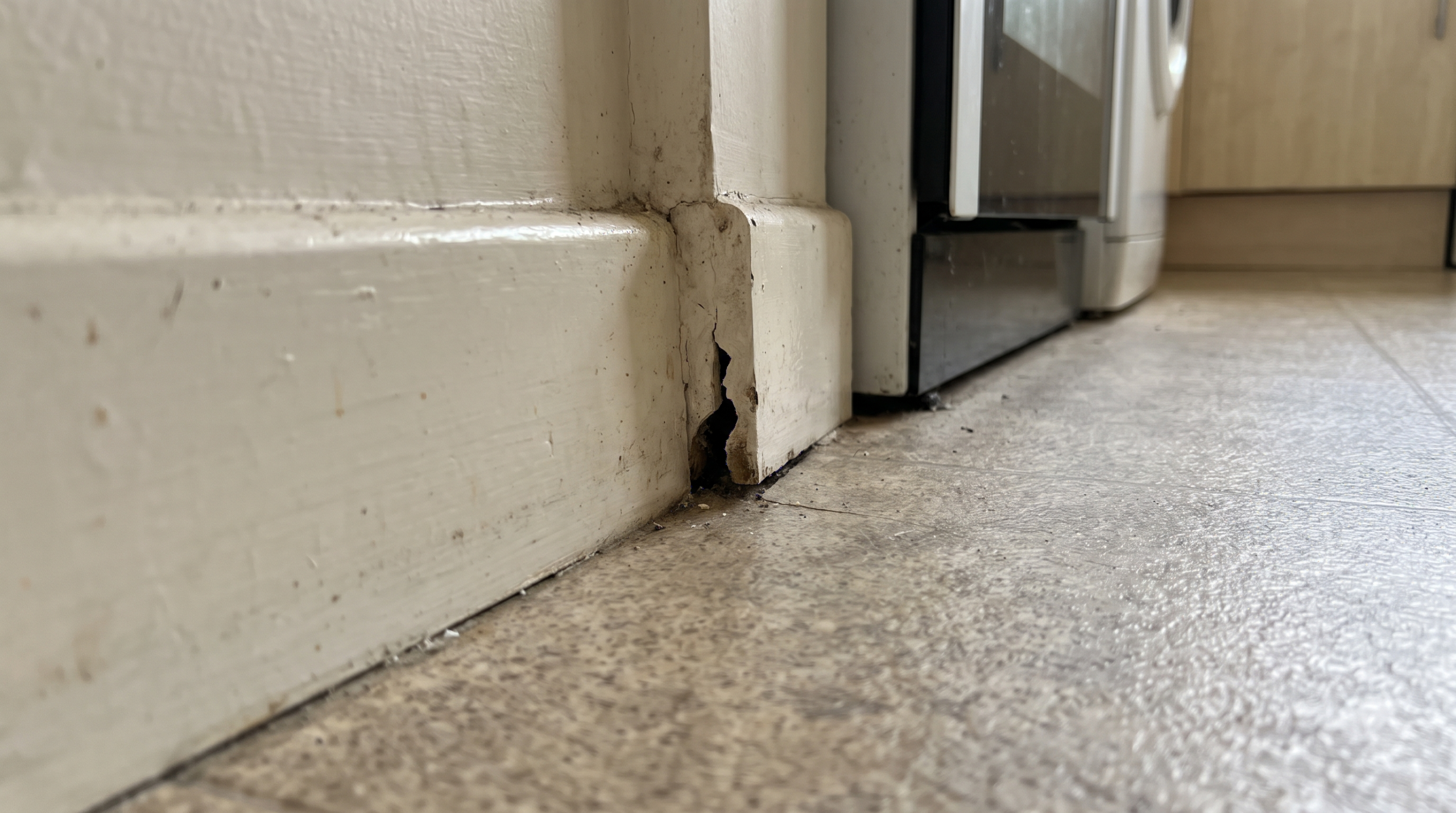
Whether you own the property or rent it, the advice on mice is the same: act quickly and fix how they got in, not just the mice. Poison alone rarely works, and a slow response usually costs more than a fast one. This guide covers what landlords and tenants each need to do.
If you want a checklist on how to get rid of mice in your rented property, click this link to download it as a one-page PDF. Tenants can use it straight away, and landlords can send it on or add it to a welcome pack.
Whose job is it, the landlord's or the tenant's?
In most cases it's the landlord's, and that surprises a lot of them. Mice get in through gaps, damaged air bricks, holes around pipework and failed drain covers. Those are building defects, and the building is the landlord's responsibility. Add to that the duty to keep the property fit for human habitation, and a mouse problem that was there at the start of the tenancy, or that comes from the structure, sits firmly with the landlord.
There is a fair counter-argument. If a tenant leaves food out, lets rubbish build up or keeps the place in a state that feeds an infestation, that's a different conversation. In practice it's rarely clear cut. A tidy house with a hole behind the kitchen unit will still have mice, and a messy house with sealed pipework often won't.
My advice to landlords: assume it's your responsibility until a pest controller tells you otherwise. Arguing about blame while a tenant lives with droppings in the kitchen is how a small, cheap job turns into a complaint to the council.
If you're a tenant: report mice as soon as you see signs, in writing and with photos, even if you suspect the building is to blame. Your landlord can only act on what they know. You shouldn't have to pay for treatment where the cause is the building, but keeping food stored away and rubbish under control matters, because it can decide whether mice stay. If you've reported it and nothing happens, your local council's pest control or environmental health team can give advice and, if needed, inspect the property.
The signs to look for
You rarely see the mice themselves. Tenants and inspectors usually spot the evidence first:
Droppings, small and dark, along skirting boards, behind appliances and in kitchen cupboards
Gnaw marks on food packaging, wiring, plastic or wood
Scratching or scuttling at night, often in ceiling voids or behind walls
A stale, musty smell in enclosed spaces
Greasy rub marks along walls where they travel the same route
Small holes or gaps, especially around pipework and under sinks
One dropping doesn't mean a full infestation, but it does mean something is getting in. A single mouse can leave dozens of droppings a day and breed fast, so waiting to see if it sorts itself out rarely ends well.
What to do in the first 48 hours
If you're the landlord
The first thing a tenant needs is to feel heard. A prompt reply matters more than a perfect one.
Acknowledge the report in writing. A quick message or email, the same day if you can. Ask for photos of droppings, damage or any gaps they've noticed.
Ask a few simple questions. Where have they seen signs, for how long, and have they noticed anything new, such as building work next door or a blocked drain nearby?
Book a pest controller. Use a reputable local firm, ideally one that offers proofing as well as treatment. Give the tenant a date and a time window.
Agree access. Tenants are entitled to proper notice for visits, so arrange it properly rather than turning up.
Keep a simple log. Dates, messages, invoices and what was found. If a dispute ever comes up, this is what protects you.
Recent changes to the rules for private landlords have made response times and record-keeping matter more. I'd check the current position with your solicitor or landlord association rather than rely on a blog, but the practical point is simple: a documented, quick response is never wasted.
If you're the tenant
Take photos and note the dates. Droppings, gnaw marks, holes and where you saw them.
Tell your landlord or agent in writing. An email or message is enough. It gives you a record, and it starts the clock on their response.
Allow access. Agree a time that works so the pest controller can inspect and treat.
Do your part while you wait. Store food in sealed containers, clear crumbs, take rubbish out daily and use the checklist linked at the top.
Chase in writing if nothing happens. If there's still no action, contact the council's pest control or environmental health team, or an advice service such as Shelter or Citizens Advice.
Getting rid of them properly: proofing first, then treatment
This is where most jobs go wrong. Treating the mice without sealing the entry points is like mopping the floor with the tap still running.
Find how they're getting in. Mice can squeeze through a gap about the width of a pencil. Check around pipework under sinks and behind baths, gaps beside boilers, damaged air bricks, cracked or missing drain covers, gaps under external doors and loose floorboards or kick-boards. In the older terraces and converted houses we see across Croydon and South London, the usual culprits are gaps where services enter the building and old, unsealed voids between floors.
Seal them with the right materials. Expanding foam on its own is not enough, as mice chew through it. Use wire wool or metal mesh with a sealant, cement or a proper proofing product for larger holes.
Then treat. A professional will normally use baits or traps, placed where the mice travel and where children and pets can't reach them. Be wary of tenants or landlords laying loose poison themselves. It can lead to mice dying in walls or under floors, and you'll then have a smell that takes weeks to clear.
Follow up. A good pest controller will return to check that activity has stopped and to collect traps. If they don't offer that, ask. Mice are rarely gone after one visit.
If you're a tenant: snap traps and enclosed bait stations are a reasonable stop-gap while you wait for the landlord's contractor. Stuffing small gaps with wire wool is fine too. Anything structural, such as a broken air brick or a hole in a wall, should be reported rather than patched yourself.
Flats and blocks: who coordinates?
Mice don't respect flat boundaries. If one flat has them, the neighbours probably do too, or soon will. Treating a single flat in isolation often just pushes the problem next door and back again a month later.
In a block, the entry points are usually in the communal parts: bin stores, service risers, boiler cupboards, car parks and the gaps where pipes pass between floors. Those sit with the freeholder or the managing agent, not the individual landlord.
If you own a flat in a block, report it to the managing agent in writing straight away and ask whether other residents have raised it. If you manage a block, a block-wide inspection and proofing visit usually costs less over time than a string of one-off call-outs. Make sure bin areas are kept clean and that residents know who to contact.
If you're a tenant in a block, tell your landlord or agent, and mention it to your neighbours. The problem is probably shared, and a single report from several flats is harder to ignore.
Mistakes to avoid
Landlords
Waiting to see if it clears up. It won't, and the tenant's patience runs out faster than the mice do.
Sending a handyman with a box of poison. No proofing, no follow-up, and often a smell in the walls a few weeks later.
Blaming the tenant by default. Unless there's clear evidence, it tends to sour the relationship and rarely holds up if challenged.
Treating one flat and ignoring the rest of the block. The mice simply move.
Not keeping records. If the council gets involved or the tenant claims for disrepair, you want a clear trail of what you did and when.
Ignoring the cause. A repeat infestation almost always means an entry point was missed.
Tenants
Reporting it only verbally, or not at all. Put it in writing with photos so there's a record.
Laying loose poison. It can leave mice dying in walls and under floors, with a smell that lasts weeks. Use enclosed bait stations.
Leaving food and rubbish out. Open food, crumbs and full bins keep mice interested even after treatment.
Not allowing access. Treatment and proofing can't happen if the contractor can't get in.
Patching structural holes yourself. Report them instead.
Keeping them out, and keeping records
For landlords
Prevention is mostly dull maintenance, which is why it gets skipped. A few things are worth building into your routine:
Check for gaps and damaged air bricks at every inspection and between tenancies
Fix leaks and damp promptly, as mice look for water as well as food
Make sure external bins are lidded and not overflowing
Include a short note in the tenant's welcome pack on food storage and who to contact if they see signs
Keep invoices and reports from pest controllers on file for the property
If a tenant's habits are part of the problem, raise it politely and in writing, with a practical suggestion rather than a telling-off. Most tenants want the problem gone as much as you do.
For tenants
Keep dry food in sealed containers, not in open packets
Clear crumbs and wipe surfaces after cooking
Take rubbish out daily and keep bin lids closed
Don't leave pet food out overnight
Report any new gaps, holes or damp patches as soon as you spot them
Final thoughts
Mice are one of the most common issues in rented homes, and one of the most avoidable when it comes to the damage they cause. Act quickly, fix the way in, treat the problem properly and keep a record. That approach protects the property, the tenant's home and the landlord's position.
If you're managing a rented property or a block in Croydon or South London and want a second pair of eyes on a recurring problem, get in touch with Gateway Property Hub. We'll give you a straight answer on what's likely to be going on and what to do next.
This article is general guidance for landlords and tenants in England and isn't legal advice. Rules on repairs and response times for private landlords have been changing, so check the current position for your own situation.