What Should You Do If You Spot Damp or Mould in Your Home?

What Should You Do If You Spot Damp or Mould in Your Home?
Finding a patch of mould on a wall, or noticing a musty smell that wasn't there before, tends to trigger one of two reactions. Either people panic and assume the worst about the property, or they clean it off and hope it doesn't come back. Neither is quite the right response. What actually matters is knowing what you're looking at, documenting it properly, and knowing exactly what to do next so it gets sorted rather than becoming a bigger problem, or a bigger argument, later on. If you're renting in Croydon or anywhere across South London and you've just spotted something you're not sure about, this is what I'd actually do, in order, based on the situations I see play out every year.
Step one: don't panic, but don't ignore it either
A small patch of mould in a bathroom corner or a bit of condensation on a bedroom window in winter isn't automatically a crisis. These are common, and in a lot of cases they're manageable with a clean and a change in ventilation habits. But "manageable" only stays true if you actually deal with it early. Mould that's cleaned once and never addressed at the source tends to come back, often larger, and a damp patch that's ignored because it "isn't that bad yet" is the single most common reason a small issue turns into an expensive, disruptive one.
The right instinct is to treat it as worth investigating properly, not as an emergency and not as something to quietly manage around indefinitely.
Step two: work out what you're actually looking at
This matters because the right next step depends on the type of problem. Condensation and the mould it causes typically show up on cold surfaces, windows, external wall corners, behind furniture, and inside wardrobes on outside walls, and they tend to correlate with cooking, showering, or drying laundry. This is usually manageable through ventilation and heating habits, alongside a proper clean.
Penetrating or rising damp looks different. It often shows as a damp patch that doesn't correspond to an obvious source of moisture from daily living, may have a tide-mark appearance, feels genuinely wet or soft to the touch rather than just showing surface mould, and doesn't respond to ventilation changes because it's coming from a building defect, a leak, a failed damp course, or water getting in through the roof or brickwork, not from the way the property is being used.
If you're not sure which you're dealing with, that uncertainty is itself a reason to report it rather than guess and hope. A landlord or a qualified surveyor can make that distinction properly, and the fix for one won't touch the other.
Step three: document it properly
Before you clean anything, take clear photos, including something for scale if it's a defined patch, and note the date. If there's a smell without visible mould yet, note where it's strongest and when you first noticed it. This isn't about building a case against your landlord, it's about having an accurate record of when the problem started and how it's progressed, which matters both for getting it fixed properly and for protecting you if there's ever a dispute about the property's condition later, particularly around your deposit at the end of the tenancy.
Keep these photos and any messages about the issue somewhere you can find them again, rather than relying on being able to locate a single old text message months later.

Step four: report it in writing
Mention it to your landlord or letting agent as soon as you've documented it, and do this in writing, even if you've already flagged it verbally or you have a good relationship with them. An email or a message through whatever platform you normally use is enough, it doesn't need to be formal, but it needs to exist as a written record with a date attached.
Describe what you've found, where, and when you first noticed it, and attach the photos. If you have a reasonable idea of what might be causing it, mention it, but don't feel you need to diagnose it yourself, that's the landlord's job to establish properly once they're aware.
This step is the one people skip most often, usually because a verbal mention feels like enough, especially with a landlord or agent they trust. It's worth doing anyway. Verbal reports are easy to forget, easy to underestimate the urgency of on the other end, and impossible to prove happened at all if it ever becomes relevant later.
What a reasonable response should look like
Once you've reported it, a responsible landlord or agent should acknowledge the report promptly and arrange to inspect or investigate within a reasonable time-frame, not leave it indefinitely on the basis that it's "probably just condensation." Existing law already gives tenants real protection here regardless of any additional rules still being finalised: rented homes have to be fit for human habitation throughout a tenancy, and serious damp or mould that makes a property unfit is something you can pursue directly, including through the courts if necessary, without needing council involvement first.
You may also see references to Awaab's Law, which currently sets fixed legal time-frames for how quickly social housing landlords have to investigate and fix damp and mould hazards. As it stands, this law applies to social housing rather than private rentals, though the government has signalled an intention to extend equivalent protections to the private rented sector as part of wider reforms, without yet confirming a date. It's worth being aware this is coming, but don't wait for it to take effect before expecting a proper response, the existing fitness for habitation duty already gives you solid ground to stand on.
If a landlord or agent is unresponsive, or dismisses the report without actually investigating, your local council's environmental health team can assess hazards in a rented property, including damp and mould, and has the power to require action, including serving improvement notices, if a genuine hazard is found. This is a legitimate route, not a last resort you should feel awkward about using, particularly if you've reported the issue properly and it's simply been ignored.
Cleaning safely while you wait
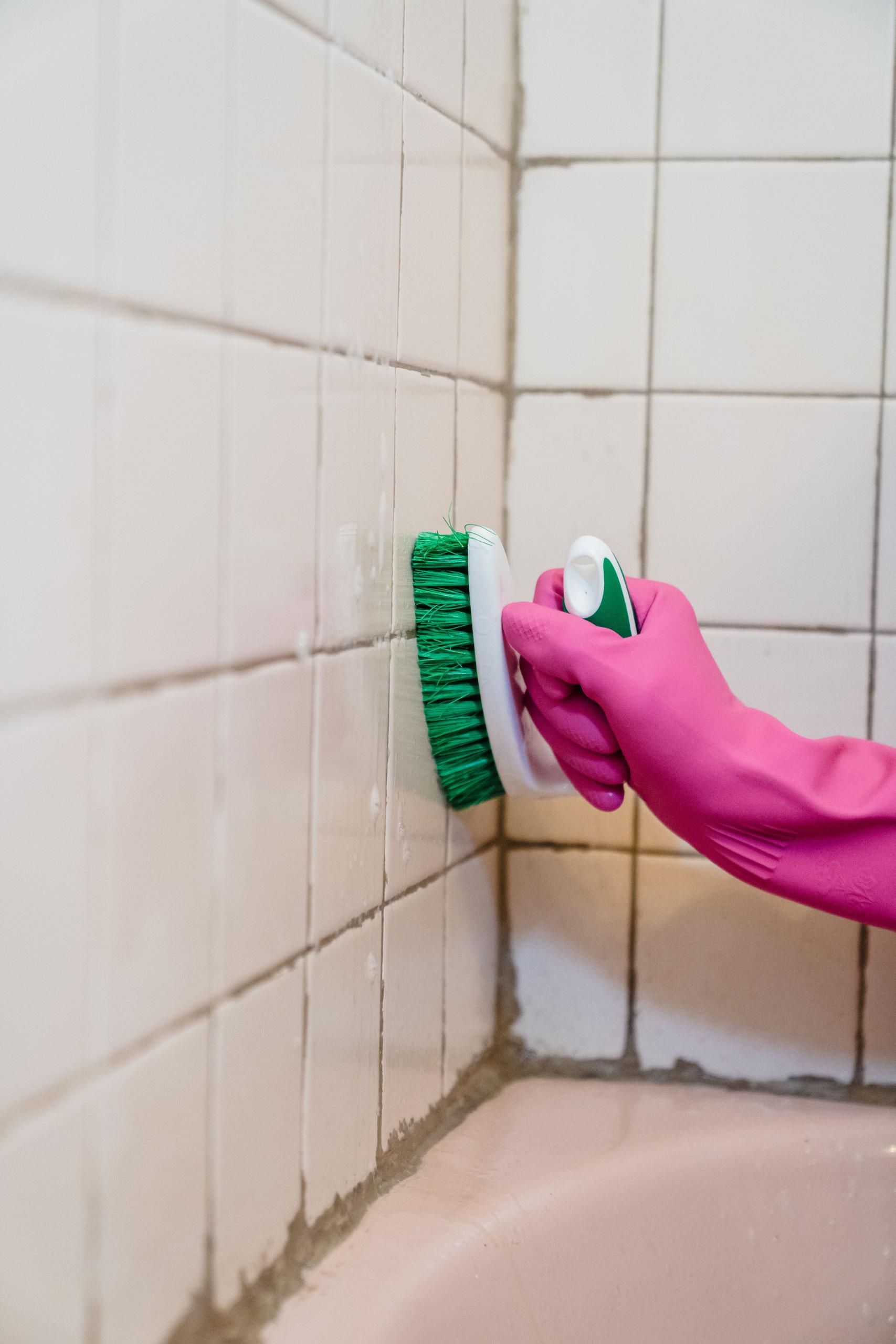
If you're dealing with a small, contained patch of mould on a hard surface, tiles, a window frame, painted plaster, it's reasonable to clean it yourself while waiting for a fuller response, both for your own comfort and because leaving visible mould to spread unnecessarily doesn't help anyone. A diluted solution of one part bleach to four parts water, or a dedicated mould and mildew cleaning product, applied and left for a few minutes before wiping, will usually deal with a contained patch. Wear gloves, keep the room ventilated while you do it, and dry the area thoroughly afterwards.
Don't paint over mould without treating it first, since it will reappear through the paint fairly quickly. And if mould keeps returning to the same spot despite proper cleaning, treat that as confirmation the underlying cause hasn't actually been addressed, not as a reason to just keep cleaning it indefinitely.
Why speed matters more than people realise
Damp and mould aren't purely cosmetic. Persistent exposure can genuinely affect respiratory health, and this risk is meaningfully higher for children, anyone pregnant, older people, and anyone with asthma or another respiratory condition. If anyone in the household falls into one of these groups, it's worth being explicit about that when you report the issue, since it's a legitimate factor in how urgently it should be treated, not something to leave unmentioned out of politeness.
There's also a simple practical reason to move quickly: damp problems very rarely stay the same size. A patch that's manageable today, treated properly, tends to stay manageable. Left for months because it "isn't that bad," it tends to spread, and what would have been a straightforward fix becomes a larger repair, sometimes affecting plaster, flooring, or belongings along the way.
If you're doing everything right and it's still happening
Sometimes tenants report a damp issue and get a response that assumes it's down to their own habits, not opening windows enough, drying too much laundry indoors, without any real investigation. This does happen, and it's worth pushing back on politely but firmly if it doesn't match your actual situation. If you're ventilating properly, using extractor fans, managing laundry sensibly, and heating the property reasonably consistently, and the problem persists or keeps returning, that's a legitimate signal something structural or mechanical is going on, not evidence you're doing something wrong.
Landlords and agents are increasingly expected not to assume damp and mould comes down to tenant "lifestyle" without a proper investigation, and a tenant who's clearly documented their own reasonable efforts is in a strong position if this needs escalating further.
Understanding the legal ground you're actually standing on
It helps to know, in plain terms, what's already protecting you, separate from anything still working its way through the wider reform process. Under existing law, landlords have a duty to keep the structure and exterior of a rented property, along with key installations like heating and water systems, in reasonable repair throughout the tenancy. Where damp or mould stems from a failure in the structure, a leak, a defect in the damp course, poor guttering allowing water to penetrate, this repairing duty already gives you solid legal footing to insist on a proper fix, not just a temporary patch.
Separately, the requirement that a rented home be fit for human habitation throughout the tenancy means that where damp or mould is serious enough to make a property genuinely unfit to live in, you have a direct route to pursue this, including through the courts if it comes to that, without first needing your local council to get involved. In practice, most situations don't need to go anywhere near that far, a clear written report and a reasonable follow-up is usually enough, but it's worth knowing the legal weight behind a genuine, well-documented complaint isn't nothing, even before any of the newer reforms specifically extend to private renting.
What to do if there's a dispute about who's responsible
Occasionally a landlord or agent will push back on a damp report, suggesting it's a result of how the property is being used rather than a building issue. This isn't automatically unreasonable, condensation genuinely is often about habits, but it shouldn't be the automatic assumption applied without any actual investigation, particularly if you've already been ventilating properly, using extractor fans, and heating the property sensibly.
If this happens, the written record you've already built becomes genuinely useful. Being able to point to specific dates you reported the issue, what you were already doing to manage ventilation and heating, and photos showing the problem's progression, puts you in a much stronger position than a verbal disagreement about whose fault it is. If the disagreement doesn't resolve reasonably, this is exactly the point to involve your council's environmental health team, who can assess the property independently rather than relying on either side's account of what's been happening.
Keeping a longer-term record, not just a one-off report
If a damp or mould issue takes more than one round of communication to resolve, which isn't unusual, particularly where the cause turns out to be structural, it's worth keeping a simple ongoing log rather than relying on a single initial report. Note each time you raise it again, each response you get, and any dates given for inspections or repairs that do or don't happen. This doesn't need to be elaborate, a running email thread or a simple dated list is enough.
This matters for two reasons beyond just getting the problem fixed. First, if the issue does end up needing escalation to environmental health or, in a worst case, legal action, a clear timeline showing you reported promptly and followed up reasonably is far more persuasive than a vague recollection of "I mentioned it a few times." Second, it protects you at the end of the tenancy, since damp-related marks or damage that were properly reported and documented as a landlord responsibility shouldn't reasonably be held against your deposit, but that's much easier to establish with a paper trail than without one.
A quick checklist for what to do
Take dated photos before cleaning anything
Work out roughly whether it looks like condensation-related mould or something more structural
Report it in writing, even if you've mentioned it verbally already
Flag clearly if anyone in the household is in a higher-risk group
Clean small, contained patches safely while waiting for a fuller response
Keep a record of what you've done on your end, ventilation, heating, laundry habits, if the cause is disputed
Escalate to environmental health if a genuine hazard is reported and not properly addressed
Why raising it early is worth doing, even if it feels awkward
I know reporting damp can feel like an uncomfortable conversation to start, especially if you've had a good relationship with your landlord or agent and don't want it to feel like a complaint. But a landlord who finds out about a damp problem early, while it's still small and straightforward to fix, is in a far better position than one who discovers it during a check-out inspection months later, by which point it's bigger, more expensive, and considerably harder to have a reasonable conversation about.
It's also worth knowing that the wider legal changes to renting in England, including the end of no-fault eviction, mean tenants are generally in a stronger position to report issues like this without the same worry that raising a complaint could put their tenancy at risk. Reporting a genuine problem properly, with documentation and in writing, isn't being difficult. It's exactly what protects both you and the property in the long run.
If you manage rental properties yourself
If you're a landlord reading this rather than a tenant, the same principles apply in reverse: acknowledge reports quickly, investigate properly rather than assuming a cause, and keep a written record of what you did and when. A prompt, professional response to a damp report is one of the simplest ways to protect a tenant relationship, protect the property, and stay ahead of a legal landscape that's clearly moving toward faster, better-documented responses to exactly this kind of issue.
At Gateway Property Hub, this is exactly the sort of thing we handle as a matter of course for the properties we manage across Croydon and the surrounding areas, treating every damp report properly rather than assuming the least demanding explanation. If you'd like a hand making sure your properties, and your response process, are genuinely ready for this, get in touch and we'll talk through what that looks like.