Winter Safety Tips Every Tenant Should Know
Winter Safety Tips Every Tenant Should Know
Most winter advice for tenants focuses on keeping bills down or preventing damp, both worth knowing, but there's a separate category that matters just as much and gets talked about far less: actual safety. Every winter I hear about the same handful of avoidable incidents, a portable heater left running too close to curtains, a carbon monoxide alarm that had a flat battery nobody replaced, someone slipping on ice outside their own front door because nobody had thought to grit it. None of these are complicated to prevent. They just need knowing about before they happen, not after.
If you're renting in Croydon or anywhere across South London, this is worth reading properly rather than skimming, because a few of these genuinely matter for your safety, not just your comfort.
Know your emergency contacts before you need them
This is the single most useful thing to sort out before winter properly sets in, and it's the thing people most often only think about in the middle of an actual emergency, which is exactly the wrong time. Make sure you know how to contact your landlord or letting agent for something urgent, including outside normal office hours, and keep this somewhere you can actually find quickly, saved in your phone, not buried in an old email you'd have to search for.
Know the number for the National Gas Emergency Service, which is separate from your landlord and needed immediately if you smell gas, and know where your property's stopcock and, if accessible, fuse box are located. None of this is useful information to be figuring out for the first time while water is actively coming through a ceiling or you can smell gas in the kitchen.
Take carbon monoxide seriously, not just as a box-ticking alarm
Carbon monoxide risk goes up in winter because heating systems are running for the first time in months, often after sitting unused since last spring, and because windows and doors are kept closed far more, giving any leak less chance to disperse. Carbon monoxide is colourless and odourless, which is exactly why it's dangerous, you won't necessarily notice anything wrong until you're already experiencing symptoms.
Test your carbon monoxide alarm regularly, not just when you happen to remember, and report immediately to your landlord if it isn't working, sounds faint, or the battery indicator shows it's low. Know the early symptoms of carbon monoxide poisoning, headaches, dizziness, nausea, and tiredness that doesn't have an obvious other explanation, particularly if several people in the household are experiencing something similar at the same time, since that pattern is a strong signal it's not just a coincidental bug going round. If you ever suspect carbon monoxide exposure, get outside into fresh air immediately and call for help, don't wait to see if it passes.
Never block or cover an appliance flue, and never use anything designed for outdoor use, a barbecue or a patio heater, for example, indoors or in an enclosed space like a garage, even briefly. This causes a meaningful number of poisoning incidents every winter, almost always from people who didn't realise the risk rather than from carelessness.
Use portable heaters properly, not just conveniently
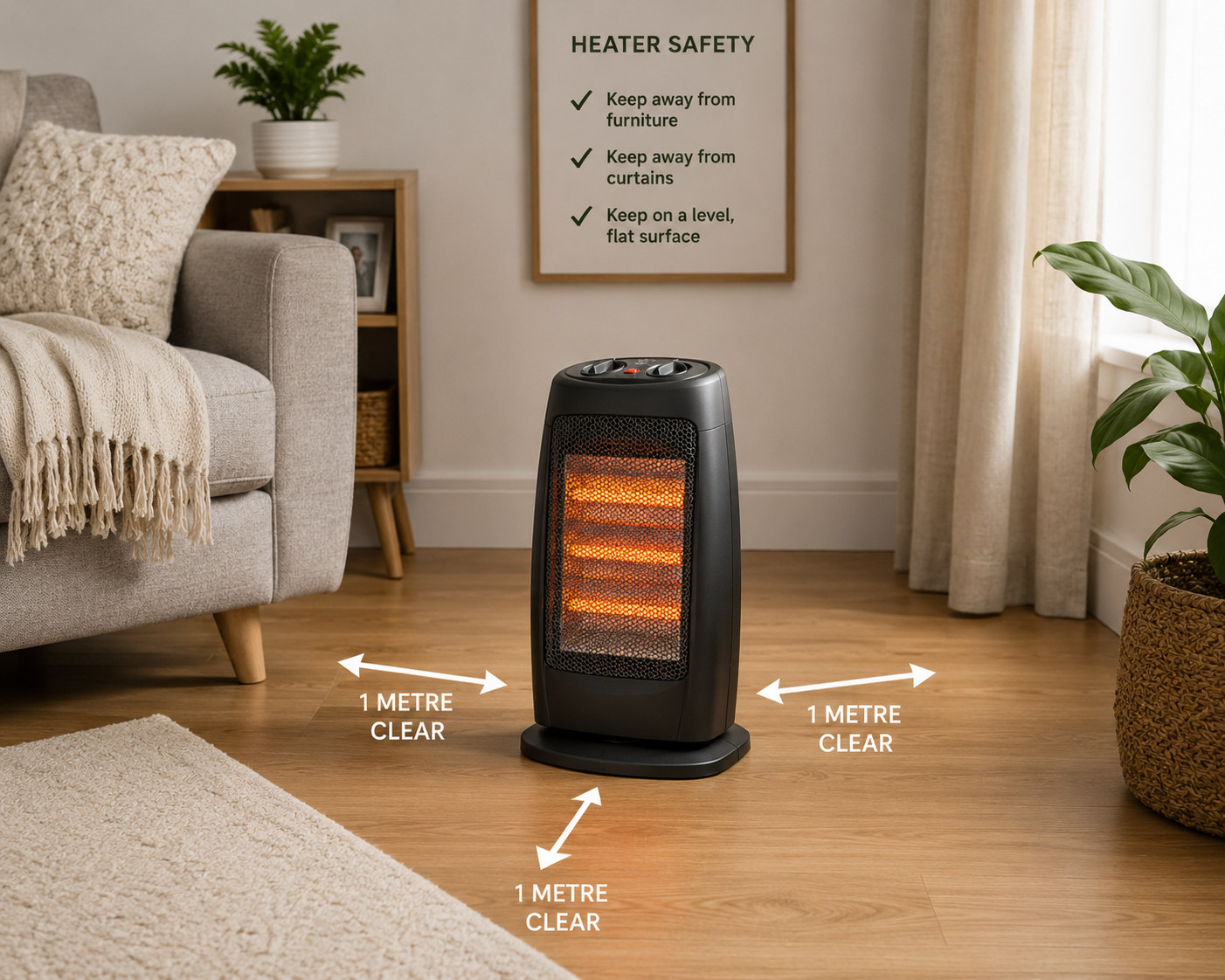
Portable heaters feel like a simple, controllable way to warm up a cold room, and used properly they're fine. Used carelessly, they're one of the more common causes of house fires over winter. Keep any portable heater well clear of curtains, furniture, bedding, and anything else flammable, and never use one to dry clothes, which is a surprisingly common habit that combines a heat source with flammable, closely-draped fabric in exactly the way you don't want.
Never leave a portable heater running unattended, and this includes overnight while you're asleep unless it's specifically designed and rated for that use. Check the plug and cable for any sign of damage or fraying before use each season, since a heater that's been sitting in storage since last winter is worth a quick visual check rather than assuming it's fine simply because it worked fine last year.
Electric blankets need a yearly check, not just a switch-on
If you use an electric blanket, it's worth actually inspecting it before the first use of the season, not just plugging it in and assuming it's fine because it was fine last winter. Look for any visible damage to the wiring, scorch marks, or a cover that's frayed enough to expose the internal elements. If a blanket is more than around ten years old, it's generally worth replacing rather than continuing to use it, since the internal wiring does degrade over time in ways that aren't always visible from the outside.
Unless a blanket is specifically designed and labelled for overnight use, it should be switched off before you actually go to sleep, used to warm the bed beforehand rather than left running while you're unconscious and unable to notice if something's gone wrong.
Candles and power cuts: a genuine fire risk combination
Winter storms occasionally bring power cuts, and candles are an obvious, understandable response when the lights go out. They're also a real fire risk if used carelessly in a moment of disruption when normal routines are already thrown off. Keep candles well away from curtains, bedding, and anything flammable, never leave them burning unattended, and consider keeping a torch or battery-powered light source somewhere easy to find specifically so you're not reaching for an open flame as the only option during a power cut.
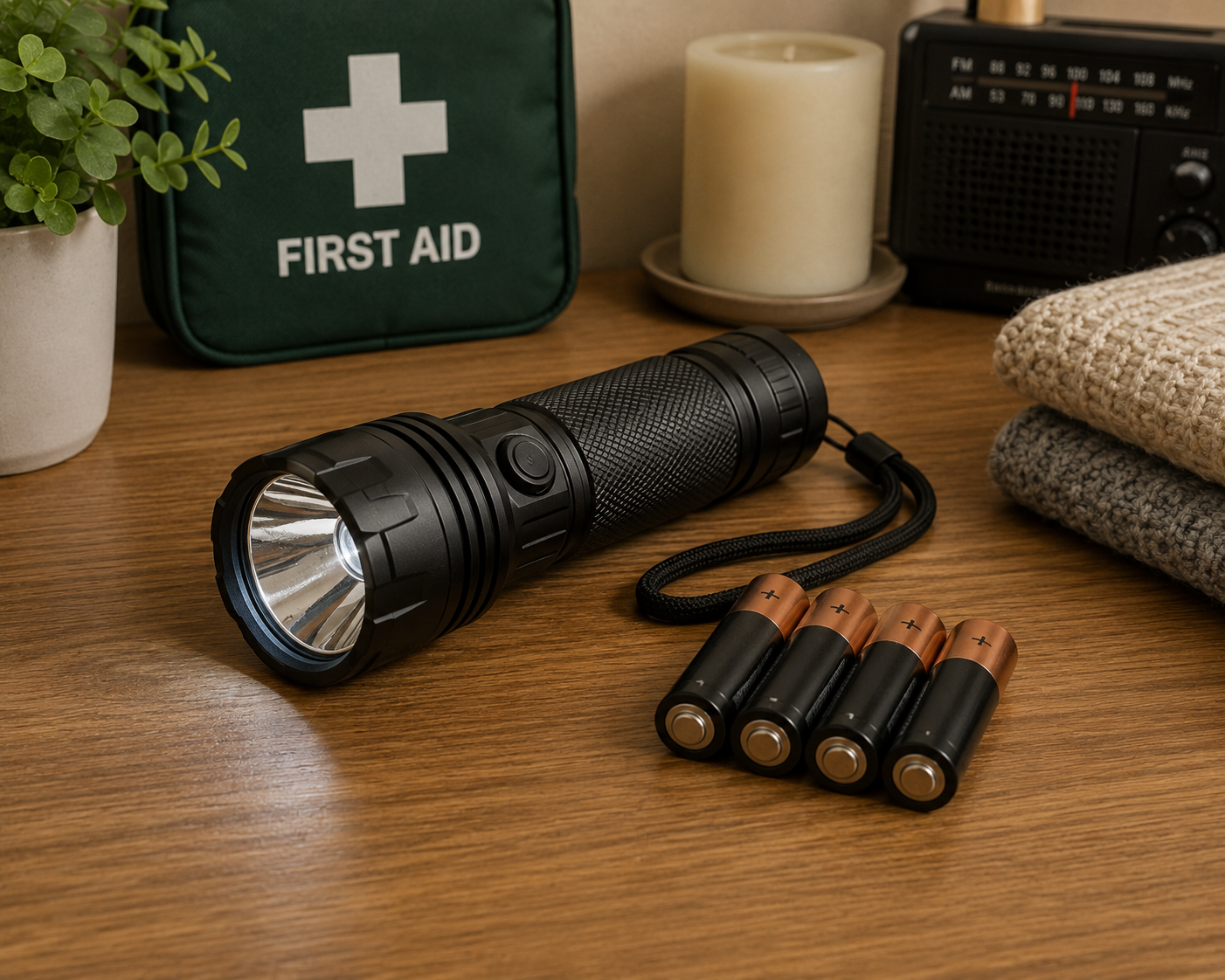
It's worth actually knowing where a torch is before you need one in the dark, rather than discovering during a power cut that the batteries died months ago and nobody replaced them.
Know what to do if you smell gas
A gas smell is one of the few situations where the right response is immediate and non-negotiable, not something to investigate cautiously first. If you smell gas, don't turn any electrical switches on or off, don't light a match or use anything with a naked flame, and open windows and doors if you can do so quickly on your way out. Leave the property and call the National Gas Emergency Service number from outside, not from inside the property using a mobile phone, since even the small electrical activity involved in a phone can theoretically be a risk in a genuinely gas-filled space, though the priority above all else is simply getting out quickly and calmly. Only go back in once you've been told it's safe to do so.
This is worth knowing in advance rather than trying to remember calmly in the moment, since a gas leak is exactly the kind of situation where clear thinking is hardest and having the steps already fixed in your mind matters most.
What to do if a pipe bursts
If you discover water coming from somewhere it shouldn't, act quickly rather than waiting to see if it stops. Turn off the stopcock immediately, this is why knowing where it is in advance matters so much, and if water is anywhere near electrical sockets, switches, or appliances, turn off the electricity at the consumer unit if you can safely reach it. Report it to your landlord or agent straight away, using whatever emergency contact method you've already established, and if the situation is genuinely serious, significant flooding, water near live electrics you can't safely isolate, don't hesitate to call emergency services.
Move anything valuable or easily damaged away from the affected area if you can do so safely, but don't put yourself at risk trying to rescue belongings from a room with standing water and exposed electrics. The belongings can generally be dealt with afterwards. Getting yourself somewhere safe is the priority.
Be sensible about ice and outdoor areas
If you have any responsibility for an outdoor path, steps, or entrance as part of your tenancy, check your agreement for what's actually expected of you versus what's the landlord's or managing agent's responsibility, since this varies. Regardless of whose formal responsibility it is, wear appropriate footwear during icy conditions, take extra care on steps, and if you notice a genuinely hazardous patch of ice on a communal area, report it rather than assuming someone else has already noticed.
If you're expecting a delivery or a visitor during icy weather, a quick word of warning about the state of the path outside is a small thing that can prevent a genuinely nasty fall, particularly for anyone less steady on their feet.
Keep half an eye on elderly or vulnerable neighbours
This isn't a legal obligation, but it's worth mentioning because it matters and it's easy to overlook. Cold weather is genuinely dangerous for elderly people and anyone with certain health conditions, and hypothermia risk isn't always obvious from the outside, someone can be quietly struggling with a cold home without it being apparent unless someone checks in. If you know an elderly neighbour, particularly anyone living alone, a brief check-in during a genuinely cold spell costs you nothing and occasionally makes a real difference.
Prepare for the possibility of a power cut
Winter storms do occasionally cause power outages, sometimes lasting several hours. Keeping a torch with working batteries, knowing where your fuse box is, and having a way to charge a phone that doesn't depend on mains power, a power bank, for instance, are all small things worth having in place before you actually need them rather than scrambling in the dark trying to figure it out. If you rely on any medical equipment that needs a power supply, it's worth having a specific plan for what you'd do during an extended outage, rather than assuming it won't happen to you.
Report issues promptly rather than working around them
A recurring theme through all of this is that most winter safety problems start small and manageable and only become genuinely dangerous if they're left. A faint smell of gas, a carbon monoxide alarm that seems to be behaving oddly, a heater with a slightly damaged cable, a drip that might be nothing, all of these are worth reporting or investigating properly rather than deciding it's probably fine and moving on. Reporting something that turns out to be nothing costs you a few minutes. Not reporting something that turns out to matter can cost considerably more.
Don't overlook basic home security during darker evenings
Winter safety isn't only about heating and weather. With darker evenings arriving much earlier, this is worth using as a reminder to check the basics of home security too. Make sure external doors and windows lock properly, and if you've noticed a lock feels stiff or a window doesn't quite close securely, this is worth reporting rather than working around, since problems like this are easier to fix in good weather than during a genuine emergency. If your property has outdoor lighting near the entrance, check it's working, since a well-lit entrance is both a practical safety measure on icy or wet evenings and a modest deterrent in its own right.
If you're going away for an extended period over winter, particularly around the Christmas and New Year period when a lot of people travel, a few sensible precautions are worth taking. Avoid announcing an empty property on public social media while you're actually away, ask a neighbour or friend to keep half an eye on the property if that's realistic, and let your landlord or agent know if you'll be away for more than a week or two, partly for security reasons and partly because it affects how the property should be managed for heating and pipe safety while you're gone, as covered above.
Dress for the conditions, indoors and out
This sounds almost too basic to mention, but cold-related health issues aren't limited to being outside in freezing weather. A poorly heated home, particularly overnight, can genuinely affect health over time, and this risk is highest for very young children, older people, and anyone with existing health conditions. If a property is struggling to stay warm despite reasonable heating use, this is worth raising as a genuine well-being concern with your landlord or agent, not just a comfort complaint, particularly if anyone in the household falls into a higher-risk group.
Outside, appropriate footwear with decent grip matters more than people think during icy weeks, and layering effectively, several thinner layers rather than one thick one, tends to manage both the cold outside and the transition into a heated indoor space far more comfortably. None of this is complicated, but it's easy to deprioritise until the first properly cold week catches you out.
What to do if you're worried about someone else's safety
If you're concerned about a neighbour, particularly someone elderly or living alone, and you haven't seen or heard from them during a period of severe cold weather, trust that instinct rather than assuming it's not your place to check. A knock on the door, or contacting a relative if you know how to reach one, costs very little and occasionally catches a genuinely serious situation early. If you can't get any response and you're seriously concerned, it's entirely reasonable to contact the non-emergency police line for a welfare check, this exists precisely for situations like this, and nobody will think less of you for using it out of genuine concern.
A quick winter safety checklist
Save your landlord's emergency contact details, and the National Gas Emergency number, somewhere easy to find
Test your carbon monoxide alarm and know the early symptoms of poisoning
Never block an appliance flue or use outdoor heating equipment indoors
Keep portable heaters clear of anything flammable, never leave them unattended
Check any electric blanket for damage before first use each season, and replace it if it's old
Keep candles away from anything flammable and never leave them burning unattended
Know where your stopcock and fuse box are located
Take extra care on icy paths and steps, and report genuinely hazardous ice
Check in on elderly or vulnerable neighbours during cold snaps
Keep a torch, spare batteries, and a way to charge your phone in case of a power cut
None of this requires spending much money or making major changes to how you live. It's mostly about knowing a few key things in advance, so that if something does go wrong, you're dealing with it calmly and quickly rather than figuring it out for the first time under pressure.
If you're a landlord reading this
A lot of winter safety comes down to tenants simply knowing what to do, and that's something landlords are well placed to help with. A short, clear message at the start of winter covering emergency contacts, stopcock and fuse box locations, and basic heater and alarm safety costs you very little time and genuinely reduces the chance of a small problem becoming a serious one on your property.
At Gateway Property Hub, we build this kind of proactive communication into how we manage properties across Croydon and the surrounding areas, because a well-informed tenant is one of the best safeguards a property can have. If you'd like help putting together clear winter safety guidance for your tenants, or want a hand managing this across a wider portfolio, get in touch and we'll talk it through.